This TradeDay Review provides an objective breakdown of the firm’s rules, payout reliability, and the “hidden” logic behind their evaluation process. As someone who has analyzed dozens of prop firms, I’ve noticed a recurring pattern: most traders fail not because they lack a strategy, but because they don’t understand the specific “personality” of the firm they are joining. TradeDay claims to be a platform “built by traders, for traders,” positioning itself as a more professional, institutional-grade alternative to the “high-leverage gambling” atmosphere found at some competitors.
Key Takeaway
If you are looking for a quick summary of this TradeDay Review and whether it fits your trading style, here are the essential facts:- What is TradeDay? -> A boutique futures prop firm based in Chicago that prioritizes professional consistency and institutional-grade trading over high-volume retail gambling.
- Best feature? -> The Static Drawdown account. Unlike most firms that use a trailing drawdown that “chases” your profit, the static option stays fixed, giving you much more room to breathe during market volatility.
- Any major drawbacks? -> Strict manual reviews. If you “one-shot” an account during a news event or drastically change your contract size to “game” the 15-day rule, they will likely extend your evaluation.
- Is it expensive? -> It is a premium investment. While they don’t offer “
20 reset" sales like Apex, they have0 activation fees, which can save you hundreds of dollars compared to Topstep. - How are the payouts? -> High reliability. You keep 100% of the first $5,000 you earn, and you can request your first payout starting from Day 1 of your funded account.
- How can I start? -> The most effective way is to sign up for a 14-day free trial to test their Tradovate integration, then choose a $50,000 Static Account to avoid the stress of trailing drawdowns.
But is it actually easier to get a payout here than at industry giants like Apex or Topstep? The reality is more nuanced than a simple “yes” or “no.” While TradeDay offers some of the most transparent terms in the futures funding space, they also enforce a strict “spirit of the rules” policy that can catch aggressive scalpers off guard. My goal with this analysis is to pull back the curtain on the evaluation mechanics and help you decide if their structure aligns with your specific trading style.
I have structured this guide to move past the marketing fluff and focus on the technicalities that actually determine whether you see a dollar in your bank account.
The Pros & The “Fine Print” Cons
To help you make a final decision, here is my summary of the trade-offs:
The Pros:
- Static Drawdown Option: A rare and valuable feature that provides a true “safety net” for swing and intraday traders.
- No Hidden Fees: What you see is what you pay. No $150 “surprise” activation fees after you pass.
- Aggressive Payouts: Keeping 100% of your first $5,000 is a game-changer for building personal capital quickly.
- Institutional Support: You are dealing with former professional traders, not just customer service reps.
The “Fine Print” Cons:
- Higher Entry Cost: You won’t find 90% off coupons here; you have to pay a fair price for a fair environment.
- Strict Consistency: The 30% rule and manual “Spirit of the Rules” review mean you cannot “luck” your way into a funded account.
- Futures Only: If you aren’t ready to trade the CME/CBOT markets, this isn’t the place for you.


The “Spirit of the Rules”: Why TradeDay Is Different (Experience Layer)
Most prop firms are essentially software companies selling data feeds, but my TradeDay Review revealed a firm that behaves more like a traditional boutique trading floor. This is likely because the founders come from deep institutional backgrounds – former exchange members and institutional analysts who view trading consistency as the only true metric of a professional.
The “Grey Area”: TradeDay’s Right to Extend Evaluations
One of the most debated aspects of TradeDay is their “Spirit of the Rules” clause. Unlike firms that use rigid, automated filters, TradeDay reserves the right to manually review your performance. If they believe you are “gaming” the evaluation, they won’t necessarily fail you, but they will extend your evaluation period.
I’ve found that this “grey area” is exactly what separates professional traders from “one-shot” gamblers. They aren’t looking for a lucky break; they are looking for a repeatable equity curve.
Scenario: The “2-Day Target” Trap
This is the most common mistake I see traders make. Imagine you are in a $50,000 evaluation and you hit your $3,000 profit target in the first 48 hours thanks to a high-volatility news event. To satisfy the 15-day trading requirement, you decide to “coast” by trading 1-lot Micros and immediately scratching the trades for the next 13 days.
- The Reaction: TradeDay’s risk team will flag this.
- The Logic: They want 15 days of representative data. If you trade 5 E-minis to get the profit and then 1 Micro to pass the time, you haven’t proven you can manage 5 E-minis consistently.
- The Outcome: You will likely receive an email stating your evaluation has been extended until you show more consistent risk management with your original contract sizing.
Case Study: Pass vs. Extension
Based on real-world feedback from the trading community, here is how the review team typically distinguishes between the two:
- Example A: The Consistent Scalper (Passed) This trader takes 5–10 trades a day. They hit the profit target on day 10. For the remaining 5 days, they continue to take their standard setups, maintaining the same contract size and risk-per-trade. Their equity curve is steady, and they are funded immediately on day 15.
- Example B: The “Windfall” Gambler (Extended) This trader “YOLO’d” a massive position during an FOMC meeting and hit the target in 10 minutes. For the next 14 days, they didn’t place a single “real” trade. TradeDay will almost certainly extend this person’s evaluation because no institutional firm would fund that behavior.
TradeDay Evaluation Plans: Choosing the Right Drawdown (Expertise Layer)
When performing a TradeDay Review, the most critical decision you make isn’t the account size – it’s the drawdown type. TradeDay is unique because they offer three distinct ways to manage your risk: End-of-Day (EOD), Intraday, and Static.
I have tested many prop firms, and most force you into a “Trailing Intraday Drawdown,” which is essentially a “dream killer” because it moves up with your unrealized profits. TradeDay’s flexibility here is a massive advantage for different trading styles.
The “Static Drawdown” Advantage
If you are a swing trader or someone who gets “drawdown anxiety,” the Static Drawdown account is the gold standard. Unlike trailing drawdowns, a static drawdown stays at a fixed price level (usually your starting balance minus a set amount).
It does not move up as you make a profit. This means if you have a $50,000 account with a $2,000 static drawdown, your “uncle point” is always $48,000. You can breathe, let your trades breathe, and you aren’t punished for “giving back” some open profit.
Drawdown Selection Matrix: Which One Fits You?
I’ve put together this quick reference to help you decide which evaluation path matches your strategy:
| Drawdown Type | Best For… | Key Characteristic |
|---|---|---|
| End-of-Day (EOD) | Day Traders | Calculated based on your closed balance at the end of the day. |
| Intraday Trailing | Scalpers | Moves up in real-time as your profit increases. Most restrictive. |
| Static | Swing/Calm Traders | Does not move. Maximum room for market fluctuations. |
Technical Ecosystem: Tradovate vs. Rithmic
My experience with their platform selection is that it caters to two different types of tech users. TradeDay supports both Tradovate and Rithmic.
- Tradovate: This is what I recommend for 90% of traders. It’s web-based, modern, and works flawlessly on Macs.
- Rithmic: Use this only if you are a “power user” who needs to connect to specialized tools like Bookmap or Sierra Chart.
Pro Tip on CME Data Fees
During the evaluation, TradeDay typically covers your data fees. However, once you pass and move to a funded account, you need to be aware of the professional CME data fees (around $135+ per month for all four exchanges). I always tell traders to factor this “cost of doing business” into their monthly profit goals so they aren’t surprised by the deduction.Understanding the Costs: No Activation Fees
One thing I really appreciate about TradeDay is the transparency of their pricing. Unlike Topstep, which often charges a “hidden” activation fee once you pass the challenge, TradeDay generally has $0 activation fees.
What you see on the pricing page is usually what you pay to get started. Just keep an eye on the monthly subscription – it stays active until you pass the 15-day requirement and get moved into the funded environment.
TradeDay Review: Payout Reliability and Rules (Authority Layer)
I have spent a significant amount of time auditing payout structures across the industry, and my TradeDay Review reveals a system that is surprisingly aggressive in favor of the trader. While many firms force you to wait 30 to 60 days before your first withdrawal, TradeDay’s “Day 1 Payout” policy is designed to get capital back into your hands as soon as you prove profitability in the funded environment.
Fact-Checking the “Day 1 Payout” Claim
The term “Day 1 Payout” often sounds like marketing fluff, but at TradeDay, it is a literal policy. Once you are in a funded account, you can request a withdrawal of your profits starting from your very first day of trading. However, I always advise traders to look at the safety buffer.
If you withdraw every cent of profit on day one, you leave yourself with zero room for a drawdown. If your account hits the maximum drawdown level because you withdrew your “cushion,” the account will be closed. I personally recommend leaving at least 50% of your profit in the account until you have built a substantial lead over the drawdown line.
The Profit Split: 100% and Beyond
One of the strongest arguments for choosing TradeDay over competitors is how they structure the early stages of your funding. According to TradeDay’s official documentation, the split is highly competitive:
- The First $5,000: You keep 100% of the first $5,000 you earn. This is a massive “psychological win” that allows you to recoup your evaluation costs and build your personal bankroll immediately.
- The 90/10 Split: After that initial $5,000, the split moves to 90% for the trader and 10% for the firm. This remains one of the highest industry-standard splits available.
Payout Methods and Logistics
For international traders, the logistics of getting paid are often more important than the split itself. I’ve found that TradeDay has streamlined this by partnering with reliable financial processors.
- Deel: This is the primary platform for payouts. It allows for various withdrawal methods, including Bank Wires, PayPal, and even Revolut or Coinbase in some regions.
- Minimum Payouts: There is generally a $250 or $500 minimum (depending on the account tier) to ensure that wire fees don’t eat up the entire withdrawal.
- Processing Time: Most traders report receiving their funds within 1 to 3 business days after the request is approved.
In my view, this payout structure is built to reward professionalism rather than just “surviving” a challenge. By giving you 100% of the first $5k, TradeDay is essentially saying they want you to stay and trade with them long-term.
TradeDay vs. Competitors: A Neutral Comparison
When I conduct a TradeDay Review, I cannot ignore the giants in the room like Topstep and Apex. No prop firm exists in a vacuum, and choosing the right one depends entirely on whether you value a “cheap” entry price or a “fair” trading environment.
To give you a bird’s-eye view, here is how TradeDay stacks up against the market leaders:
| Feature | TradeDay | Topstep | Apex Trader Funding |
|---|---|---|---|
| Primary Drawdown | Static / EOD / Intraday | End-of-Day (EOD) | Intraday Trailing |
| Activation Fee | None ($0) | High ($149+) | Small ($80 – $150) |
| First $5k Profit | 100% to Trader | 100% to Trader | 100% to Trader |
| Consistency Rule | 30% / Spirit of Rules | 50% Rule | None (but strict payout rules) |
| Best For | Professionalism & Support | Brand Stability | High-Volume / Copier Trading |
TradeDay vs. Topstep: Rule Flexibility vs. Brand Longevity
Topstep is arguably the most famous name in futures funding, but when you dig into the mechanics, TradeDay offers several advantages that Topstep lacks.
| Comparison Point | TradeDay | Topstep |
|---|---|---|
| Drawdown Options | 3 Types (Includes Static) | 1 Type (EOD only) |
| Upfront Costs | Subscription only | Subscription + Activation Fee |
| Payout Speed | Day 1 (starting from $0) | After 5 winning days |
| Support | High-level (former traders) | Standardized / Corporate |
Detailed Analysis: Topstep has the longest track record, which gives many traders peace of mind. However, I’ve found their “Activation Fee” to be a major hurdle for new traders. You might pay $49 for a challenge, but you’ll be hit with $149 the moment you pass. TradeDay is much more transparent – what you pay for the subscription is generally your only entry cost.
Furthermore, Topstep is very rigid. TradeDay’s Static Drawdown is a “secret weapon” for swing traders that Topstep simply doesn’t offer. If you want a firm that treats you like a partner rather than a number in a giant machine, TradeDay wins on the “human” factor.
My Advice
Choose Topstep if you want the “safety” of a massive, long-standing brand. Choose TradeDay if you want to avoid hidden activation fees and need a drawdown that doesn’t punish you for market volatility.
TradeDay vs. Apex Trader Funding: Quality vs. Volume
Apex is known for its massive 80%–90% off sales. If you want to trade 20 accounts at once using a trade copier, Apex is for you. But for a professional, single-account environment, my TradeDay Review suggests a clear difference in quality.
| Comparison Point | TradeDay | Apex Trader Funding |
|---|---|---|
| Drawdown Style | Focus on EOD/Static | Intraday Trailing (Hardest) |
| Accountability | Manual “Spirit of Rules” review | 100% Automated / Rigid |
| Withdrawal Rules | Flexible / Low minimums | Strict 10-day windows / Caps |
| Platform Tech | Modern (Tradovate/Rithmic) | Mostly Rithmic-focused |
Detailed Analysis: Apex is designed for “churn.” They expect most traders to fail because the Intraday Trailing Drawdown moves up with your unrealized profit – even if you haven’t closed the trade. I’ve seen countless traders “fail” at Apex while still being in a profitable position.
TradeDay, by contrast, is built for longevity. They don’t run 90% off sales because they aren’t looking for thousands of “gamblers” to pay for resets. They provide a much higher level of educational resources and a “Members Arena” that actually helps you improve.
My Advice
Choose Apex only if you are an experienced scalper using trade copiers to spread risk across 10+ accounts. Choose TradeDay if you are a serious trader who wants a fair drawdown and a firm that won’t look for technicalities to deny your payout.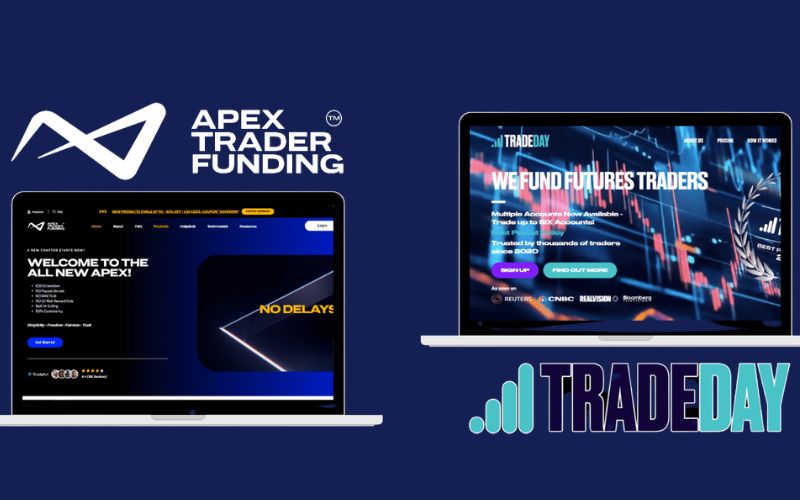
Who This Is NOT For (The Trust Filter)
While my TradeDay Review highlights many positives, I want to be brutally honest: TradeDay is not a “one-size-fits-all” solution. In my experience, certain types of traders will find their rules frustrating or their costs prohibitive. If you fall into one of the following categories, you might want to look elsewhere.
The “Gambler” Alert: No One-Shotting Allowed
If your strategy relies on “YOLO-ing” your entire account during a high-impact news event like NFP (Non-Farm Payroll) or an FOMC meeting, TradeDay is definitely not for you. They are specifically looking for institutional-style consistency.
As I mentioned earlier, their “Spirit of the Rules” clause gives them the manual authority to extend your evaluation if they see you gambling. They want traders who can manage risk over a 15-day window, not someone who got lucky once and spent the rest of the time scratching trades.
The Micro-Budget Trader
If you are hunting for “90% off” sales or $15 evaluation resets, you will be disappointed here. TradeDay positions itself as a premium service.
- Pricing: Their prices are higher than “churn and burn” firms like Apex.
- Resets: They don’t encourage the “blow it and reset it” mentality that has become common in the prop world.
- Value Proposition: You are paying for quality support, a better drawdown structure, and a cleaner path to funding. If you only have $30 to your name, you won’t be able to afford the monthly subscription and data fees here.
The Forex-Only Trader
This is a critical distinction that many beginners overlook. TradeDay is a pure Futures firm. They specialize in markets like the CME, CBOT, NYMEX, and COMEX.
I often talk to traders who are looking for:
- MetaTrader 4 or 5 (MT4/MT5)
- Currency pairs (like EUR/USD or GBP/JPY)
- CFDs
If that is your world, TradeDay is not for you. You will be trading E-mini and Micro contracts (Gold, Oil, S&P 500, Nasdaq) on platforms like Tradovate or Rithmic. If you aren’t ready to learn the mechanics of the futures ladder or order flow, you should stick to a dedicated Forex prop firm.
Final Warning
If you struggle with discipline and hate the idea of a human reviewing your trades to see if you are “consistent,” you will likely clash with TradeDay’s management. They are a boutique firm that pays attention to how you trade, not just your final P&L.Frequently Asked Questions
During my TradeDay Review research, I noticed that several questions consistently pop up on Reddit and trading forums. These are the “make or break” details that every trader should understand before signing up.
- The Math: If your profit target is $3,000, your biggest single day cannot exceed $900.
- The Reason: I’ve found that this rule is designed to filter out “one-hit wonders” who get lucky on a single trade.
- The Solution: If you do have a massive “outlier” day where you make 50% of the target, you aren’t disqualified. You simply have to keep trading until your total profit is high enough that your “big day” represents 30% or less of the total. It’s about smoothing out your equity curve.
Final Verdict: The Score
My deep dive into this TradeDay Review reveals a firm that stands out not by being the cheapest, but by being the most “grown-up” in the room. I’ve seen dozens of prop firms come and go, but TradeDay’s commitment to institutional standards and fair drawdown structures makes them a top-tier choice for serious futures traders.
They aren’t trying to trick you with trailing drawdowns that move during an open trade, and they don’t hide behind massive activation fees. Instead, they offer a transparent, albeit disciplined, path to professional funding.
Final Recommendation: Who should sign up? In my professional opinion, TradeDay is the best fit for the “Transitional Trader.” If you have outgrown the “gambling” phase of cheap evaluations and you are ready to be treated like a professional partner, TradeDay is your best bet.
If you value transparency, fairness, and a human touch over flashy discounts, I highly recommend their $50k or $100k Static Drawdown accounts. However, if you are still in the “hit or miss” phase and rely on high-leverage news gambles, you will likely find their consistency checks too restrictive.